Oct 03, 2025
4 min read
The year is 2055. You are on a planetary station above Mars, looking down at the astonishing network of routes that ferry resources to the red planet. Massive solar arrays beam power to the surface. Cargo ships unload minerals, water, and oxygen. Human colonies are rising from dust into permanence, their tech base expanding with each new shipment.
It looks like progress — and in many ways, it is. But as you watch, you realize that the most valuable resource isn’t the metals in the cargo bays or the energy beaming down. It’s the invisible streams of data flowing constantly between every colonist, every habitat, every machine. Data is what sustains the system, what keeps people alive in an environment where a small mistake means death.
And yet, who owns that data?
The R1 Droid
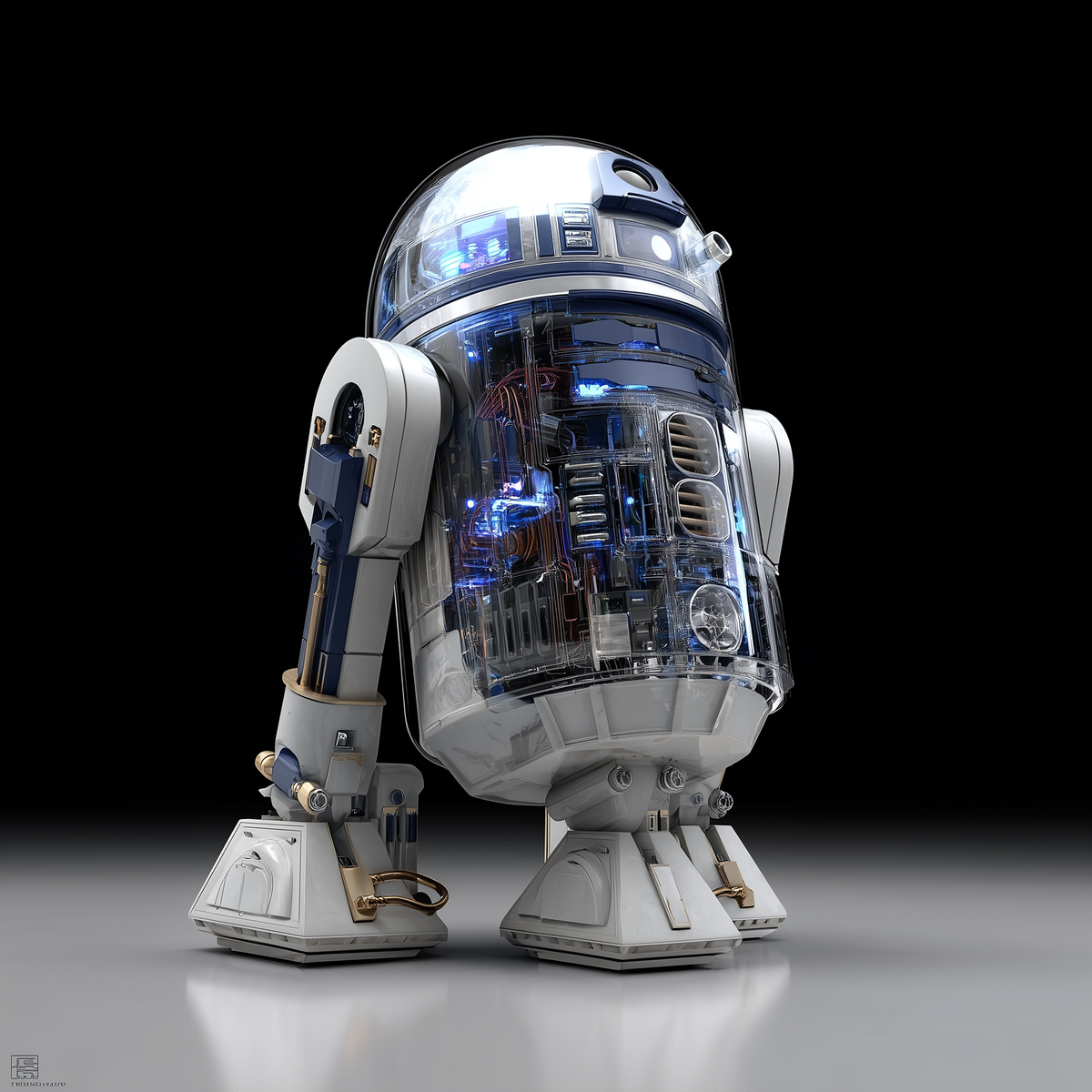
Now picture an early R2 unit — call it an R1 droid — in this setting. Not just a repair bot, but a faithful companion that helps you survive.
It works seamlessly with all your biometric devices: your watch, your implant, even low-power radio signals from your skin to sense your pulse, your temperature, your blood oxygen. It knows your stress levels, your emotions, your hidden pains.
It can see through you, literally.
It tracks your oxygen levels, reminds you to hydrate, checks your nutrition, even adjusts your workload if your heart falters. It knows your sleep cycles, your fears, your private weaknesses. It is closer than family, more constant than any doctor.
“The R1 knows everything about you — but the real question is, who does it belong to?”
Who Really Owns It?
On the surface the R1 sits in your home, rolling beside your chair, chirping quietly like a trusted friend. But if its software runs on a cloud subscription, if its updates come from a remote server, if its very functions depend on a corporation’s terms of service, then it doesn’t belong to you at all.
It belongs to whoever controls the servers.
Under today’s cloud-and-subscription model, ownership becomes an illusion. You don’t own your music — you rent it. You don’t own your apps — you license them. And if this model is applied to something as intimate as an R1 droid, the consequences get strange fast:
- Features throttled or disabled unless you pay more.
- Biometric data “shared with partners” by default.
- Health advice shaped by hidden incentives — pharma kickbacks, advertising deals, insurance restrictions.
- Access to your own records disappearing if you stop paying.
“An R1 built this way is not your droid. It’s a Trojan horse in your living room.”
Its body may be in your home, but its brain is in a data center — and its loyalty follows the data center.
Why Privacy is Everything
This is not just a Martian problem. It is the same problem we face on Earth today. As AI systems, wearables, medical apps, and cloud-based health platforms surround our lives, they are becoming our silent companions. But unless we secure the principle of data sovereignty — the right for individuals to own and control their personal health data — these companions will not serve us. They will serve the Empire.
“The Empire strikes at privacy because privacy is the foundation of truth.”
Only when data is private can it be honest. Only when it is sovereign can it be trusted. Without this, the very tools that could extend our healthspan and improve our lives will instead be bent into profit-seeking mechanisms, sold back to us at a price, or used to restrict what choices we can make.
A Robot in the Box
The solution begins where trust begins: privacy. Privacy is not the absence of sharing; it is the condition that makes truth possible. If your R1 reports back to the Empire, you will never truly know if what it tells you is for your good or for someone else’s profit.
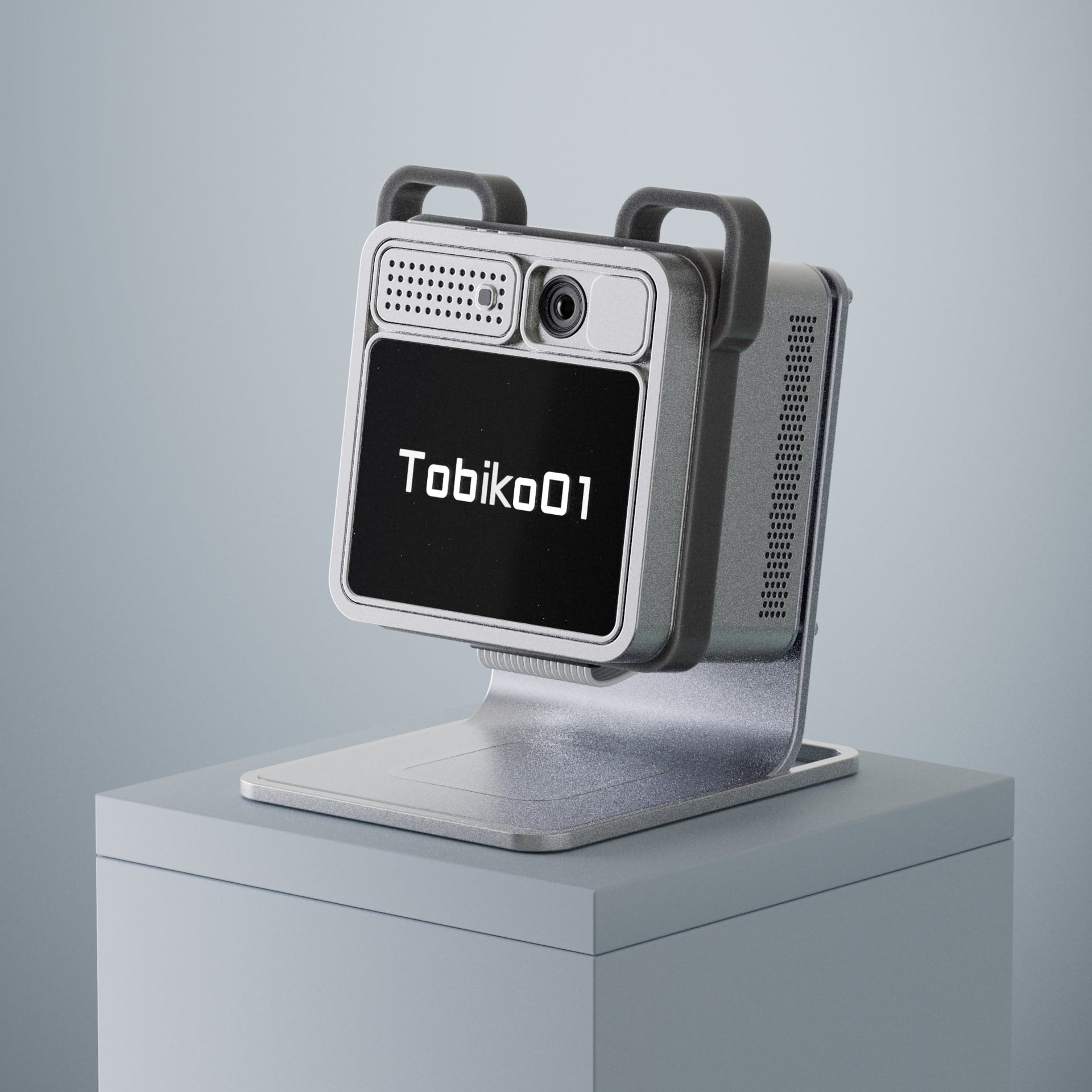
This is why we’re building a different kind of system — a robot-in-the-box — a sovereign companion that lives in your home, running on NVIDIA Jetson hardware. It is designed to grow with you, to become part of you over time, but always on your terms.
It must preserve your rights stronger than your banking data — because this isn’t your bank account, this is your life data. It must be COPPA compliant, SOC2 compliant, and more, with privacy as its core architecture rather than a bolted-on feature.
It is your home. Your family. Your life.
“If your droid can be turned against you, better to shut it all off and go back to the woods as a free human being.”
The society we are building must honor that truth: we came from the woods, and we belong naturally in a condition that includes privacy, family protection, and freedom of choice.
Privacy is the Main Ingredient in Truth
The strongest idea here is simple: privacy is the main ingredient in truth.
Without privacy, data becomes corrupted by incentives. With privacy, it becomes the raw material of genuine understanding. And understanding is what leads to real healthspan gains.
Nature has been teaching us this lesson for billions of years. Every cell in the body contains its own private machinery, its own secure nucleus, its own sovereignty. And yet, those cells cooperate — forming tissues, organs, entire organisms. Privacy is not isolation. Privacy is what makes honest cooperation possible.
In the same way, human systems must be built. Individuals must keep sovereignty over their data, while still choosing when and how to cooperate for the greater good. The alternative is a Borg-like future: perfect integration with no autonomy, no choice, and no trust.
The Path Forward
Our path forward is clear. To protect truth, to extend healthspan, to create technology that serves people instead of empires, we must follow the model of nature itself: sovereign cells, sovereign humans, cooperating freely in larger systems.
Read our earlier essay: R2-D2 Belongs to You →
“The R1 droid belongs to you — or else it belongs to the Empire.”