Dec 04, 2025
5 min read
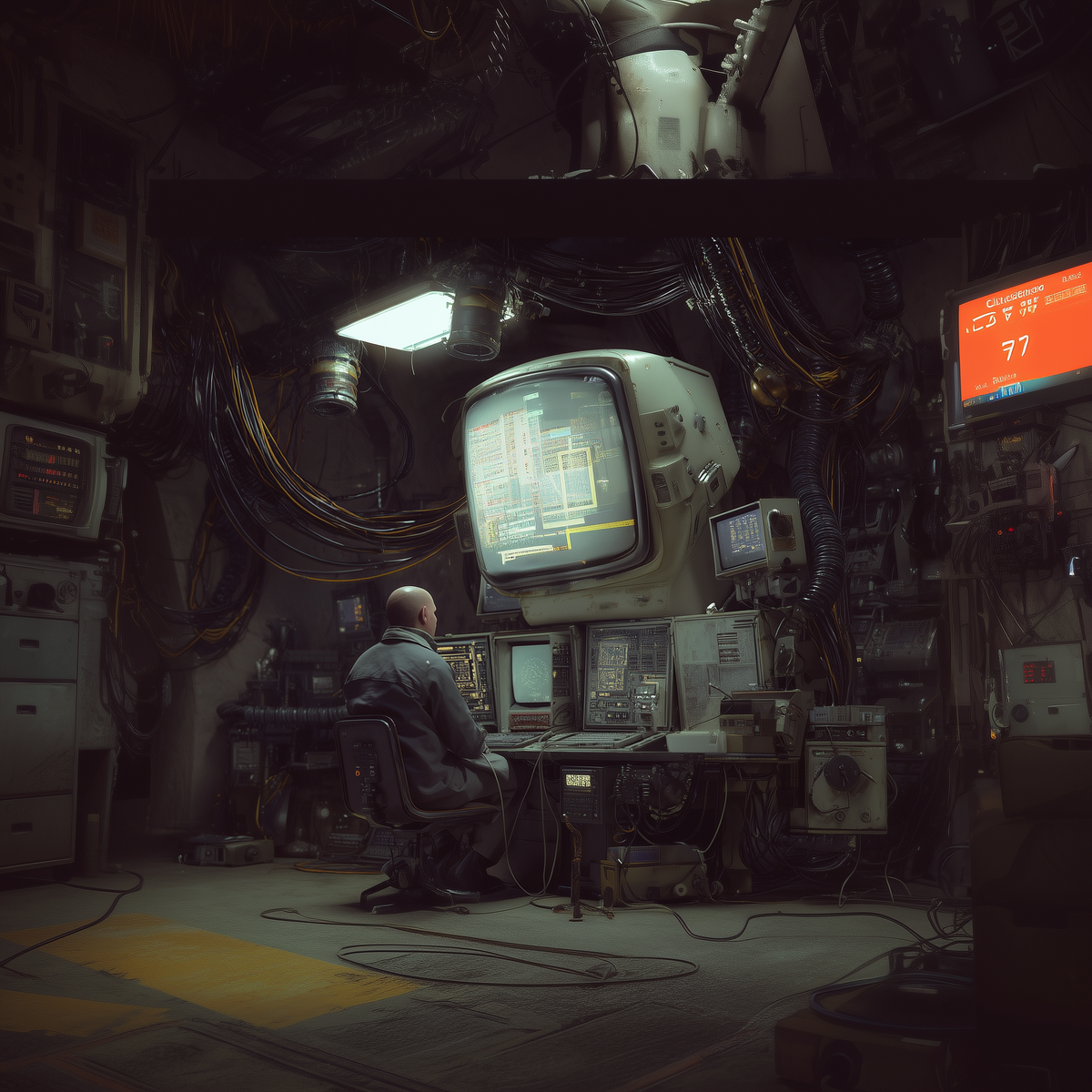
In the film Brazil by Terry Gilliam, the world runs on a tangle of ducts, pipes, and machinery that no one truly understands anymore. When something breaks, the official repairmen show up in crisp uniforms carrying clipboards and stamped forms. They recite regulations and follow procedures written decades earlier by committees that no longer exist, for reasons no one remembers. Despite all this choreography, they can’t fix the simplest malfunction. They maintain the ritual, not the reality.
Only one man can actually repair anything: Robert De Niro’s rebel plumber. He drops through the ceiling uninvited, ignores the paperwork completely, diagnoses what is really happening, and fixes the pipes with skill and speed. He understands the infrastructure at the level of pressure, joints, and flow—the level where truth still lives. For this, he is treated as a criminal. In Gilliam’s dystopia, competence outside the bureaucracy is subversion. Understanding is dangerous.
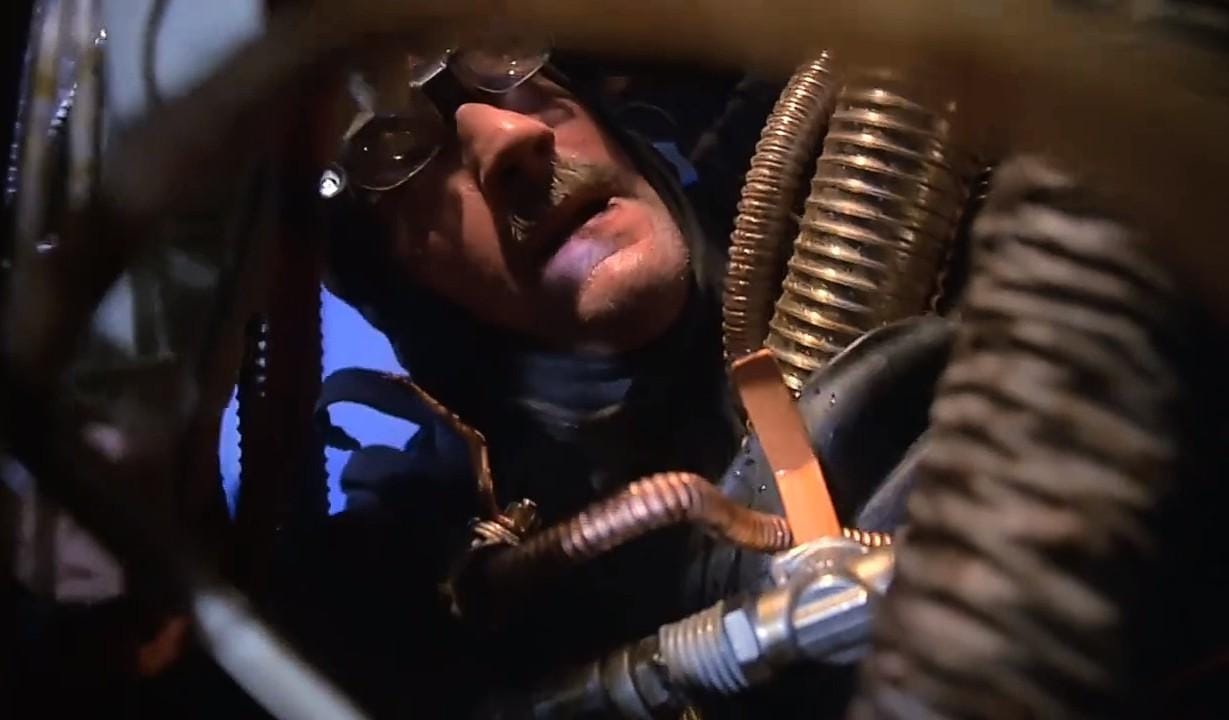
“A bureaucratic dystopia where paperwork replaces action and procedure overrides reality.”
How far are we from this type of dystopia? Is this process already manifesting?
Imagine stepping out of a cab in a city you’ve never visited before. The car pulls away. You reach for your phone—your wallet, your money, your navigation system, your contact list, your identity—and realize it is gone. In the space of one moment, you fall out of the digital world you inhabit every day.
You try to call someone. You can’t. You don’t know a single phone number. Not your closest friend’s. Not your partner’s. Not your parents’. Those numbers lived exclusively inside your phone, and without it, they may as well never have existed.
You try to summon a ride. There is no app.
You try to pay for a meal or a room. You have no cash, no cards, no way to transfer money.
You try to navigate the city. The paper map you find is mute and indifferent. It doesn’t rotate, doesn’t talk, doesn’t guide. It expects skills you no longer practice because your devices have been doing that work for years.
You aren’t just inconvenienced. You’re suddenly helpless.
You’ve fallen out of the system—and discovered how little of you remains outside it.
Extend this another step into everyday life. Think about how hard it is to get human support from some of the biggest companies you rely on. Try contacting a human being at Google. Try escalating any issue—an account lockout, a mistaken flag, a lost service. There is no desk to approach, no phone number that reaches a real person, no channel that guarantees interaction with someone who can actually help. Support has been offshored, outsourced, automated—and soon even those offshored humans will be replaced by AI agents with no ability to step outside the script.
Imagine being trapped in a looping robotic phone tree, being hung up on repeatedly, unable to reach anyone whose judgment isn’t pre-programmed. Imagine pleading for help and discovering that the system doesn’t hate you—it simply cannot hear you. In some ways, this is already worse than Brazil: there, at least, the bureaucrats were physically present. In our world, the machinery has no face at all.
Project this a little farther into the future. Children will grow up in cars that always drive themselves. They will never learn how to merge, how to react to a skid, how to anticipate danger, how to understand the machine that carries them. They will be trained passengers in their own lives. When the system fails—inevitably—there will be nothing in their experience to fall back on.
Extend once more into the world of software. Increasingly, the digital infrastructure we depend on is being built by people who don’t truly understand it. They “vibe code” with AI assistants: they describe what they want, accept whatever code is generated, and stitch fragments together into systems they cannot explain. The result works—until the day it doesn’t. And when it breaks, the number of people who can dive into the guts of the machine and actually fix it dwindles. We are constructing the digital equivalent of Gilliam’s ducts: vast, opaque, and doomed to fail in ways no human is prepared to repair.
This is how a civilization becomes brittle. One skill after another is outsourced. Memory moves into devices. Navigation into algorithms. Driving into autopilot. Customer service into machines. Problem-solving into AI. The span of what a person can do without assistance shrinks until losing a phone becomes a temporary exile from one’s own life—and encountering a broken system becomes a crisis with no accountable human to talk to.
Why does this matter now, more than ever?
Because the systems that are absorbing our skills and mediating our world are built on the most intimate material we produce: our data. Every movement, every click, every hesitation, every choice, every message—these are not trivial digital footprints. They are the training material for the systems that will shape the future.
AI does not learn from physics alone. It learns from us. Our behavior, our habits, our preferences, our mistakes—these become the foundation of the algorithms that increasingly structure modern life. The future is being built on our data. If that data is harvested without clarity, consent, or agency, then the future is being built for goals we did not choose. We become the raw material of systems designed by institutions that answer to profit, scale, and control—not to the individuals whose lives feed those systems.
“When data becomes the fuel of civilization, the question of who controls it becomes the question of who controls the future.”
If people cannot decide how their data is used, they cannot decide how the future is built.
If they cannot influence how the systems are trained, they cannot influence what the systems become.
If their data is taken, centralized, and used to produce models they cannot inspect, challenge, or correct, then they lose the last meaningful form of agency in a technological civilization.
In earlier eras, rights were tied to land, labor, speech, property.
In this era, rights are tied to data.
Without sovereignty at that layer, everything above it—choice, competence, independence—erodes.
This is the world Brazil warned us about: a system that continues running long after the people inside it have lost the ability to repair it or even understand it. A society where the machinery gains momentum and the humans become passengers, waiting for someone—anyone—who still knows how things work.
The rebel plumber in Gilliam’s film represents the person who can still reach into the pipes of civilization and make them work again. In our world, the equivalent act of rebellion is to reclaim ownership of our data, to insist on transparency and agency, and to preserve the skills that keep us from becoming helpless inside systems designed by a small group of unaccountable actors.
If we fail to do this, we will wake up one day living in a world built on our lives but not for our benefit—surrounded by systems we depend on but cannot influence, speaking to machines that cannot hear us, and waiting for a rebel plumber who no longer exists.